



Saudi Arabia's digital payments market is growing at a 16.06% CAGR (Compound Annual Growth Rate) through 2029, with 12.07 million digital payment users projected for 2025 and transaction volume exceeding $103.51 billion. Digital wallets have overtaken card payments to become the leading e-commerce method, driven by Saudi Vision 2030's push to digitize financial services. The mada network — labeling every locally issued debit card — creates a single contactless-ready acceptance layer across the banked population, complemented by prepaid cards for the country's large unbanked migrant workforce.
Saudi Arabia at a glance
Country | Saudi Arabia |
|---|---|
Population | 36.5 million |
GDP (USD) | $1,275.0 billion |
Currency | Saudi Riyal (SAR) |
Digital payment adoption | 34.8% penetration (2025) |
Digital payment CAGR | 16.06% (2025–2029) |
Which Payment Methods Do Saudi Buyers Use Most?
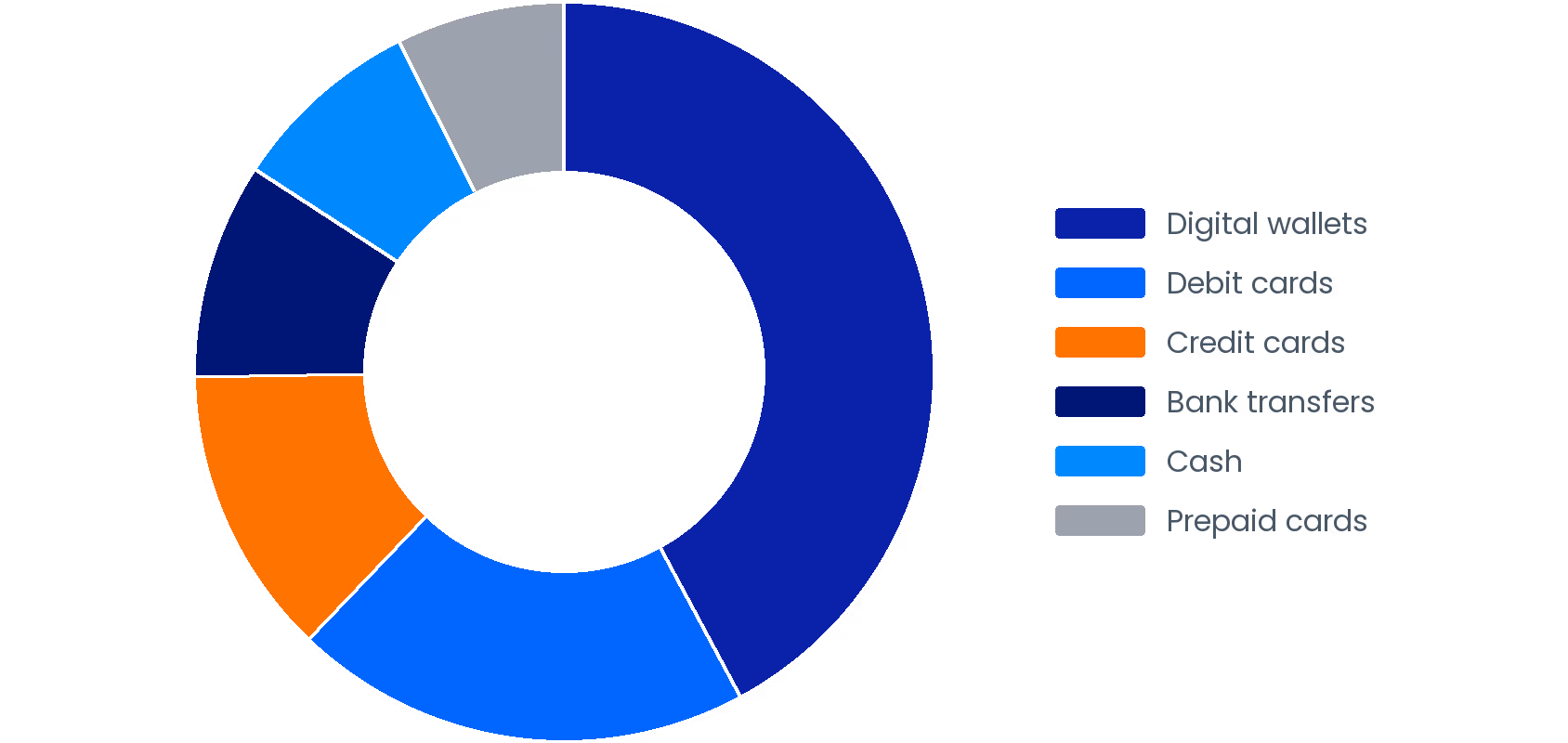
Digital wallets hold 40% of Saudi Arabia's e-commerce transactions in 2025, projected to reach 51% by 2030. Debit cards rank second at 19%, followed by credit cards at 12% and bank transfers at 9%. The combined card category — debit, credit, and prepaid — accounts for 38% of online transactions. Saudi Arabia's 2025 payment breakdown:
Digital wallets — 40%, projected 51% by 2030. STC Pay (stc pay) is the leading local stored-value wallet; Apple Pay and PayPal complete the category. Wallets function as a convergence point absorbing card, BNPL (Buy Now, Pay Later), and direct debit flows.
Debit cards (mada) — 19%, projected 14% by 2030. All locally issued debit cards carry the mada network label and support NFC (Near Field Communication) contactless technology. mada acceptance is a baseline requirement — it covers the banked majority of the population.
Credit cards — 12%, projected 7% by 2030. Primarily active in cross-border purchases and premium-priced goods. Main method for high average order value transactions.
Bank transfers — 9%, projected 11% by 2030. Growth is supported by Saudi Vision 2030's fintech mandate and the Sarie instant payment system. One of only two categories projected to gain share by 2030.
Cash — 8%, projected 5% by 2030. Declining as digital infrastructure matures; not a strategic priority for cross-border merchants at launch.
Saudi Arabia E-commerce Payment Method Share (2025)
How Digital Wallets, Mada, and BNPL Work for Merchants in Saudi Arabia
Saudi Arabia's payment stack has two integration traps: mada BIN ranges fail silently on gateways that route only through Visa/Mastercard rails, and stc pay requires a separate API path from Apple Pay. The table below maps key platforms, routing requirements, and settlement behavior. For merchants experiencing card declines on mada-issued cards through international-only acquirers, routing through scheme-aware acquirers and implementing decline recovery logic is the standard fix.
Payment Method | Key Platforms | Approx. Share | What Merchants Should Know |
|---|---|---|---|
Digital Wallets | stc pay, Apple Pay, PayPal | ~40% | stc pay is a stored-value account, not a card-linked passthrough — it requires separate integration from Apple Pay and does not settle through standard Visa/Mastercard rails. |
Debit Cards (mada) | mada network (Visa/Mastercard co-branded) | ~19% | International gateways that only route to Visa/Mastercard rails will silently decline mada BIN ranges — verify your gateway explicitly lists mada as a supported scheme before going live. |
Credit Cards | Visa, Mastercard, American Express | ~12% | Enable 3DS2 (3-D Secure 2) authentication to reduce fraud exposure on high-value cross-border orders where dispute rates are elevated. |
Bank Transfers (Sarie) | Sarie instant payment system | ~9% | Sarie settles in near real-time 24/7 including weekends and public holidays — payment can be confirmed before shipping without a manual reconciliation hold. |
BNPL | Tabby, Tamara | ~4% (2025); projected 5% by 2030 | Both providers offer merchant-facing APIs; liability for non-payment transfers to the BNPL provider after order confirmation, removing credit risk from the merchant. |
How Payment Methods in Saudi Arabia Will Change by 2030
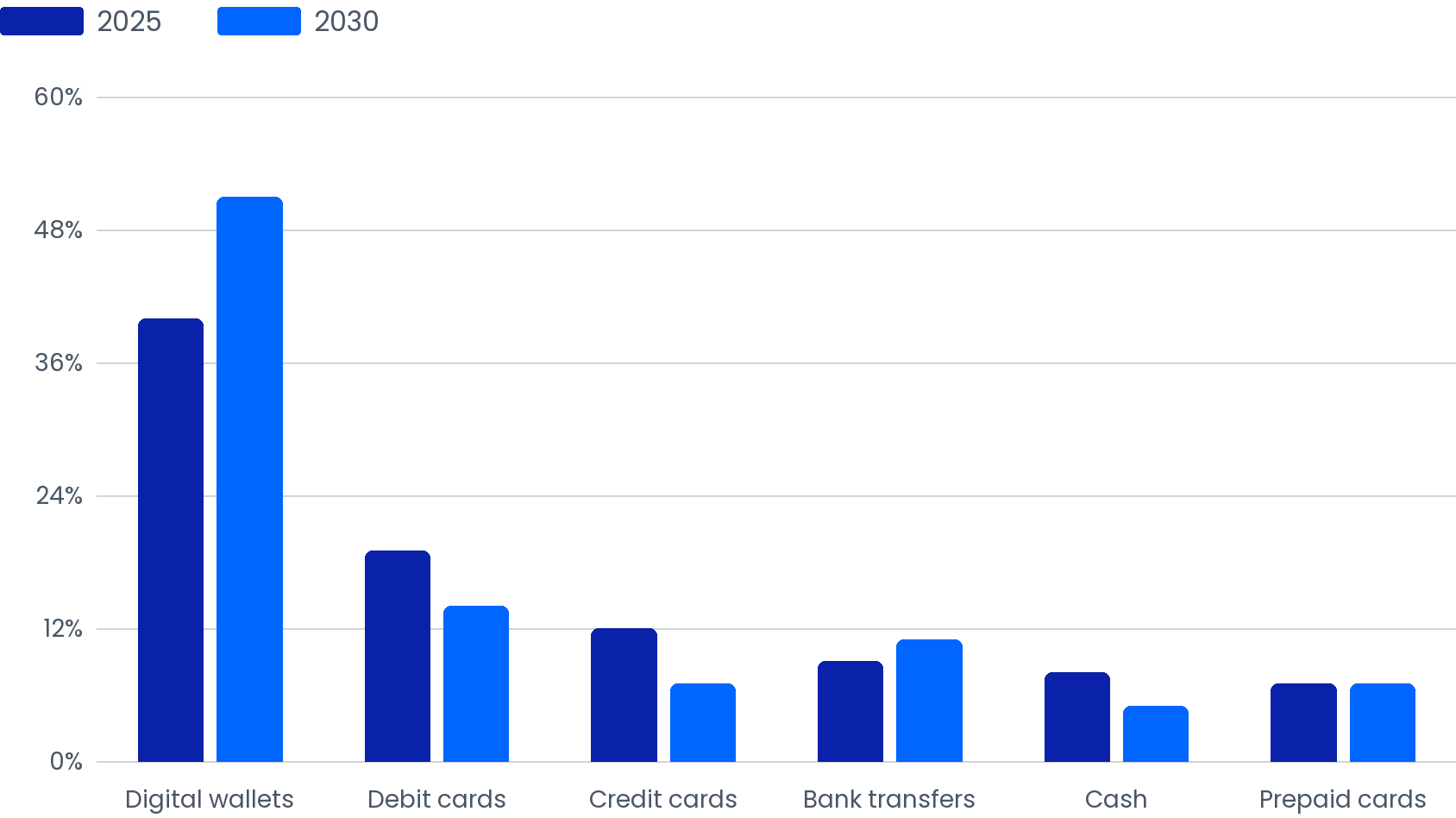
Digital wallets are the dominant growth story, rising from 40% to 51% by 2030. Bank transfers grow from 9% to 11%; BNPL from 4% to 5% — the only other categories gaining share. Debit cards decline from 19% to 14%; credit cards from 12% to 7% as wallet adoption absorbs volume. For merchants deciding how to configure checkout priority as wallets approach majority share, the 2030 trajectory reinforces stc pay and Apple Pay as mandatory first slots, with mada debit as essential secondary coverage for the full banked population.
Saudi Arabia Payment Methods: 2025 vs 2030 Projected Share (%)