



Turkey's e-commerce market is one of Europe's fastest-growing digital commerce environments, with revenue projected to reach USD 37.34 billion by 2026 and digital payments expanding at a CAGR (Compound Annual Growth Rate) of 24.99%. The defining characteristic of the Turkish market is an entrenched taksit (installment payment) culture that keeps credit cards dominant even as digital wallets and the FAST instant bank transfer system gain ground.
Key figures: Turkey
Country | Turkey |
|---|---|
Population | 86.0 million |
GDP (USD) | $1,565 billion |
Currency | Turkish Lira (TRY) |
Digital payment CAGR (2025–2030) | 24.99% |
Projected digital payment penetration (2030) | 67.45% |
Which Payment Methods Do Turkish Buyers Use Most?
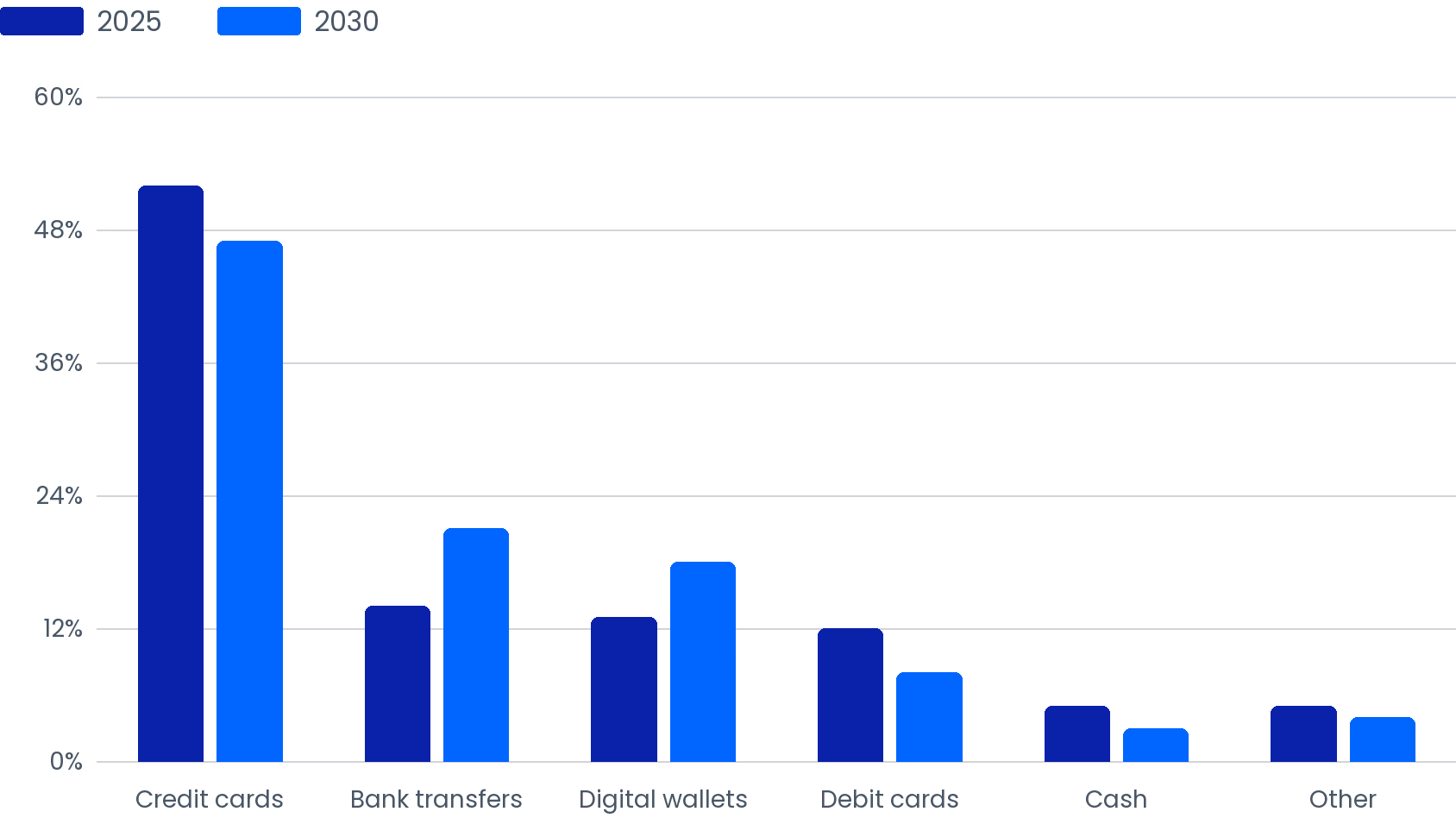
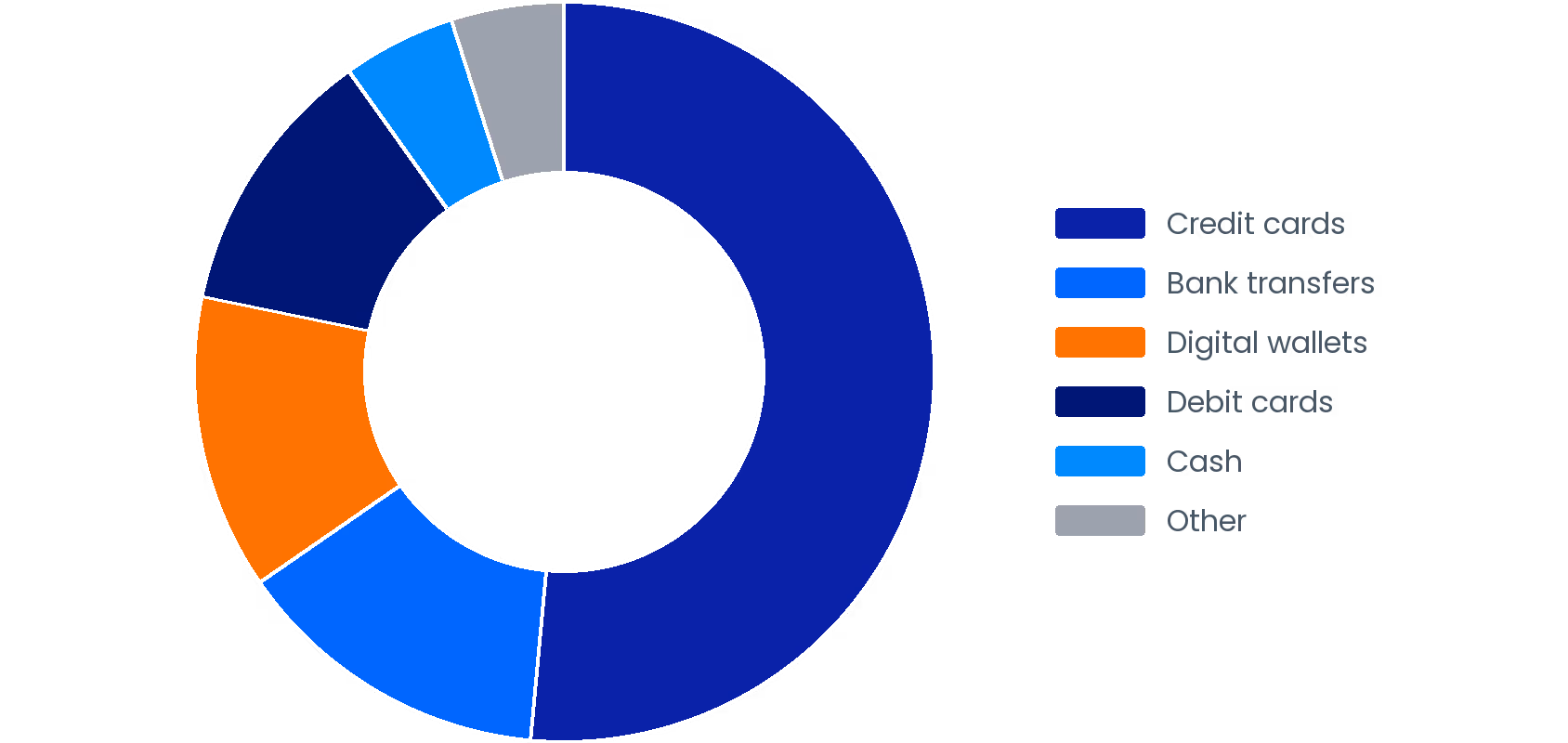
Credit cards account for 52% of Turkish online transactions in 2025, rooted in the taksit installment system where most consumer purchases are split across multiple billing cycles. Bank transfers hold 14% and are the fastest-growing segment; domestic digital wallets account for 13%. Together, credit cards and bank transfers cover 66% of Turkish e-commerce volume. Turkey's 2025 payment breakdown:
Credit cards — 52%, projected 47% by 2030. Visa and Mastercard lead, with the local Troy card organization gaining market position. Merchants without taksit installment options face significantly higher abandonment on high-ticket items.
Bank transfers — 14%, rising to 21% by 2030. The FAST instant payment system uses phone numbers and simple identifiers for real-time settlement. Integrated with TR QR codes, it is the fastest-growing segment in the market.
Digital wallets — 13%, rising to 18% by 2030. International wallets face operational restrictions under Turkey's KVKK (Kişisel Verileri Koruma Kanunu) data protection law, making domestic platforms BKM Express and Papara the primary options.
Debit cards — 12%, declining to 8% by 2030. Routed through the same domestic and international card networks as credit cards; declining as consumers shift to wallets and bank transfer apps.
Cash and other — 5% combined, declining to ~4% by 2030. Cash plays a minimal role in online commerce; no dedicated COD infrastructure is required for market entry.
Turkey E-commerce Payment Share 2025
How Credit Cards, FAST, and Digital Wallets Work for Merchants in Turkey
Turkey's payment stack has two structural requirements: taksit installment support (without which high-ticket abandonment rises sharply) and domestic wallet coverage under KVKK data localization rules. The table below maps key platforms, integration constraints, and merchant settlement behavior. For merchants whose card transactions fail on Turkish-issued cards due to non-local acquirer routing, multi-rail recovery and decline management is the recommended approach before disabling card acceptance.
Payment Method | Key Platforms | Approx. Share | What Merchants Should Know |
|---|---|---|---|
Credit cards | Visa, Mastercard, Troy | ~52% | Taksit installment plans are a standard checkout expectation — configure 3, 6, and 12-month interest-free options through your acquiring bank before launch; buyers actively filter for installment availability. |
Bank transfers | FAST, TR QR | ~14% | FAST is phone-number-based and settles instantly with no chargeback mechanism; once funds are received they are irrevocable, structurally reducing fraud exposure compared to card payments. |
Digital wallets | BKM Express, Papara | ~13% | International wallet brands face operational restrictions under KVKK; integrating only international wallets will exclude the majority of Turkish wallet users — domestic platform support is required. |
Debit cards | Visa, Mastercard, Troy | ~12% | Debit cards share card network routing but do not support taksit; for high-ticket items, debit card buyers may need different promotional incentives to convert. |
Cash / Other | — | ~5% | No dedicated COD infrastructure is needed for market entry; the 5% combined share covers cash and minor categories. |
Payment Method Trends in Turkey: 2025 to 2030
Bank transfers are the standout growth story, rising from 14% to 21% by 2030 as FAST adoption deepens. Digital wallets grow from 13% to 18%; credit cards ease from 52% to 47%; debit cards decline from 12% to 8% as wallet and transfer volume absorbs share. For merchants deciding how to sequence these methods at checkout — with taksit credit cards anchoring the stack and FAST as a complementary high-intent rail — the quadrant framework maps each method by penetration and friction in the Turkish context.
Turkey Payment Method Share: 2025 vs 2030