



The United States is the world's largest digital payments market by transaction value, with 262 million digital payment users in 2025 — a penetration rate of 76.38%. Digital wallets have overtaken direct card entry as the top online payment method, driven by Apple Pay and Google Wallet's card-binding model. Digital payment transaction volume is projected to exceed $3.15 trillion between 2025 and 2029, growing at a CAGR (Compound Annual Growth Rate) of 21.66%.
United States overview
Country | United States |
|---|---|
Population | 341.8 million |
GDP (USD) | $30,620 billion |
Currency | United States Dollar (USD) |
Digital payment user penetration | 76.38% (2025) |
Digital payment CAGR (2025–2029) | 21.66% |
Which Payment Methods Do US Buyers Use Most?
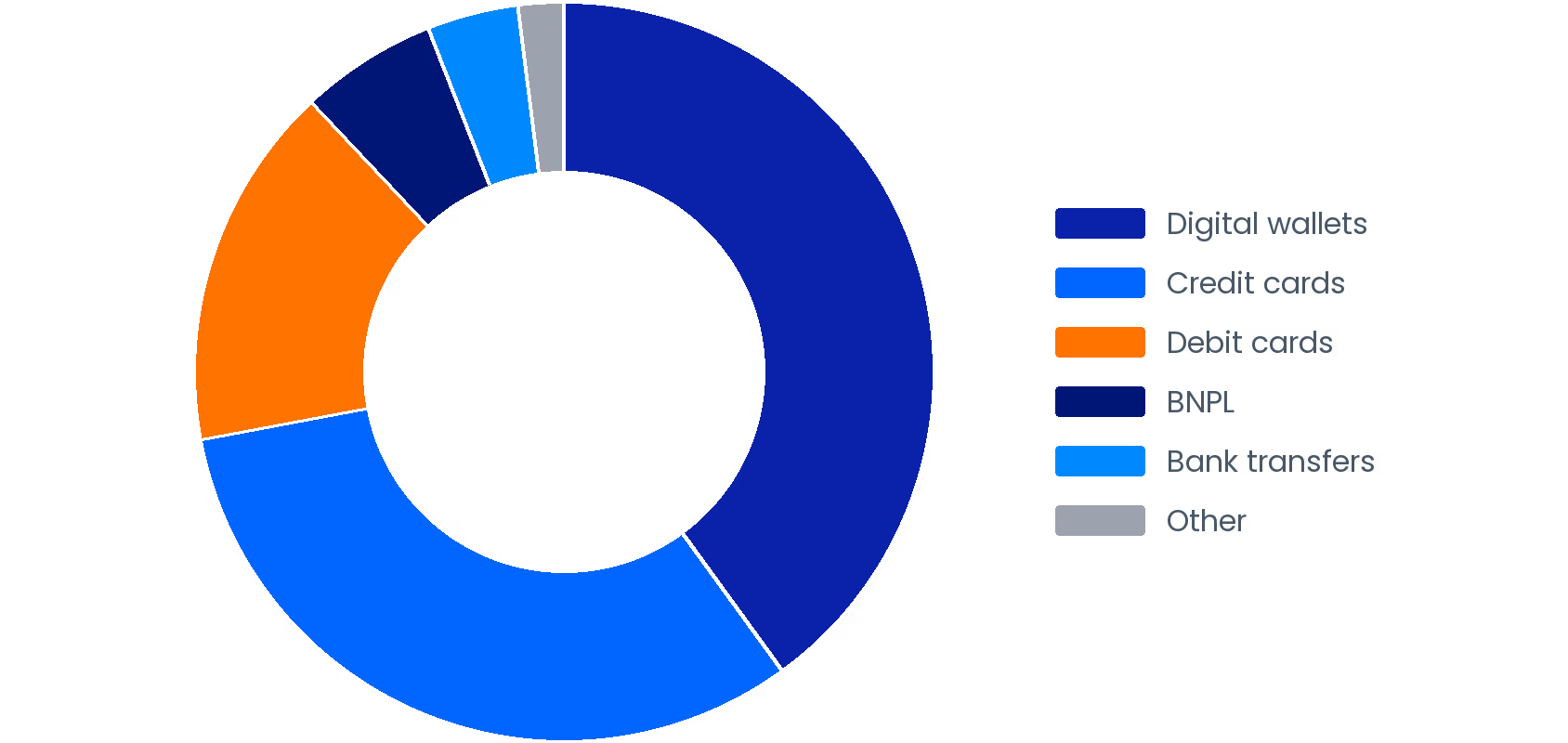
Digital wallets lead US e-commerce at 40% in 2025, followed by credit cards at 32% and debit cards at 16%. BNPL (Buy Now, Pay Later) holds 6% — the fastest-growing segment at a five-year CAGR of 13%. Together, wallets and credit cards cover approximately 72% of US online transaction volume. US's 2025 payment breakdown:
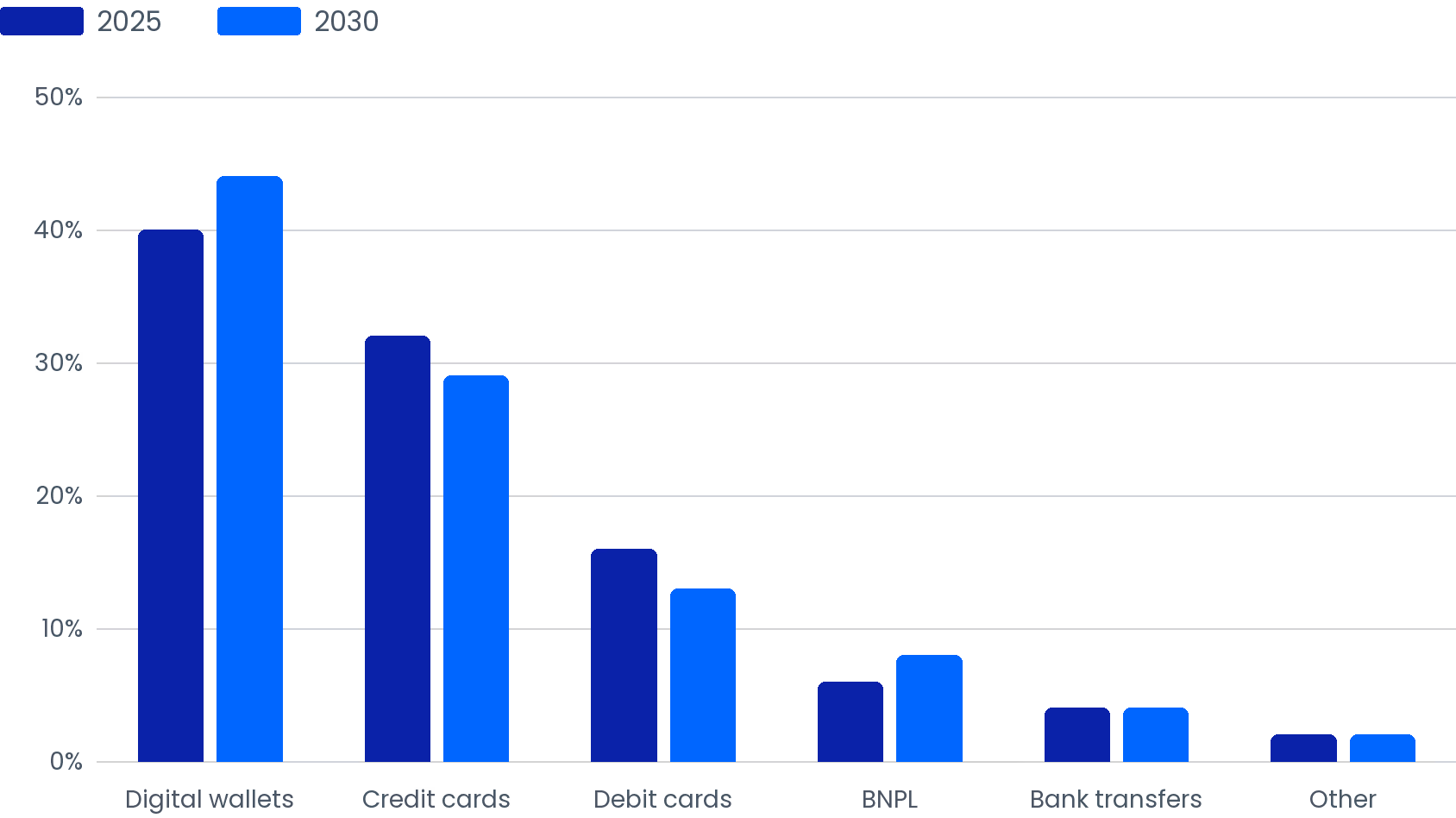
Digital wallets — 40%, growing to 44% by 2030. Apple Pay and Google Wallet dominate through card-binding logic that eliminates manual card entry. Offering wallet payment reduces friction on mobile and measurably lifts conversion.
Credit cards — 32%, projected 29% by 2030. Visa leads brand share, with Mastercard closely behind. A significant and growing portion of credit card spend flows through wallet rails rather than raw card-number entry.
Debit cards — 16%, projected 13% by 2030. Declining as wallets absorb volume. Banks are accelerating this shift through initiatives like Paze, which strengthens digital card-binding at the bank level.
BNPL — 6%, projected 8% by 2030 at a five-year CAGR of 13%. Affirm and Klarna lead. BNPL raises average order value (AOV) by converting purchase hesitation into deferred payment commitment for higher-ticket items.
Bank transfers — 4%, stable through 2030. ACH (Automated Clearing House) transfers serve high-value and recurring billing scenarios. Standard ACH settles in 1–3 business days; same-day ACH is available for an additional fee.
United States Payment Method Share (2025)
How Digital Wallets, Credit Cards, and ACH Work for Merchants in the US
The US payment stack is increasingly layered — card credentials migrate into wallet rails via Apple Pay and Paze, while debit card disputes follow Regulation E rather than card-scheme rules, creating distinct liability structures. The table below maps key platforms, chargeback rules, and settlement timelines. For merchants whose cross-border card transactions face elevated decline rates or Visa's 1% VDMP chargeback threshold, multi-rail routing and chargeback management addresses both the authorization and dispute exposure.
Payment Method | Key Platforms | Approx. Share | What Merchants Should Know |
|---|---|---|---|
Digital wallets | Apple Pay, Google Wallet | ~40% | Wallet checkout bypasses manual card entry — reducing declined transactions from incorrect card numbers; test card-binding flows before launch. |
Credit cards | Visa, Mastercard | ~32% | A growing share of credit card spend flows through wallet rails (via Paze and bank digital services) rather than direct card-number entry — monitor wallet-sourced card authorization rates separately. |
Debit cards | Visa Debit, Mastercard Debit | ~16% | Debit card transactions carry Regulation E consumer protections, which differ from credit card chargeback rules — dispute windows and liability allocation apply differently. |
BNPL | Affirm, Klarna | ~6% | BNPL providers pay merchants the full invoice amount upfront after shipment confirmation — chargeback risk stays with the BNPL platform, not the merchant. |
Bank transfers (ACH) | Chime, neobanks, major US banks | ~4% | Standard ACH settles in 1–3 business days; same-day ACH incurs an additional fee. Best suited for recurring billing and subscription models where the buyer authorizes the pull in advance. |
How the US Payment Mix Will Shift by 2030
Digital wallets grow from 40% to 44% by 2030. Credit cards decline from 32% to 29%; debit cards from 16% to 13% as card credentials migrate into wallet layers via Apple Pay, Google Wallet, and Paze. BNPL grows from 6% to 8% — the fastest-growing category at a five-year CAGR of 13%. For SaaS and subscription merchants, ACH's fit for recurring billing makes it a strategic complement to card acceptance — for the recurring payment failure and churn recovery side of that equation, the involuntary churn guide covers smart retry, dunning, and tokenized authorization strategies applicable to the US market.
United States Payment Method Share: 2025 vs 2030 Projection