






Brazil is Latin America's largest economy, with 123 million online shoppers recorded in 2024 and a projected annual growth rate of 10.14% through 2029. The payment landscape is defined by Pix, a central-bank-operated instant transfer system that became the dominant checkout method within four years of its 2020 launch. Digital wallet penetration reaches 85% of the population — yet card payments remain deeply embedded, making Brazil a market where three distinct rails must all be supported.
Quick facts: Brazil
Country | Brazil |
|---|---|
Population | 213.4 million |
GDP (USD) | $2,280 billion |
Currency | Brazilian Real (BRL) |
E-commerce users (2024) | 123 million |
Digital wallet penetration | 85% of population |
What Payment Methods Dominate Brazil's E-Commerce?
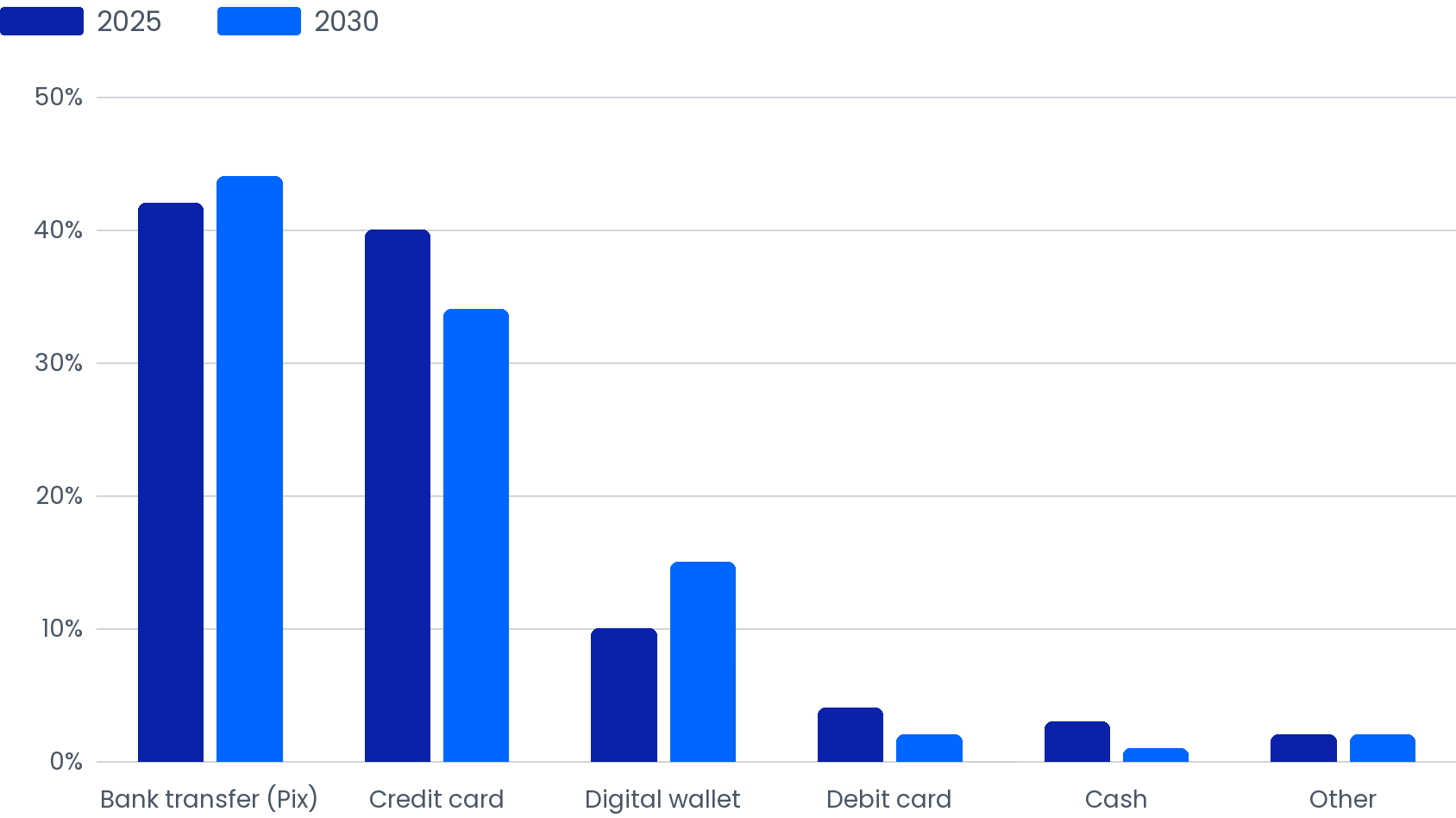
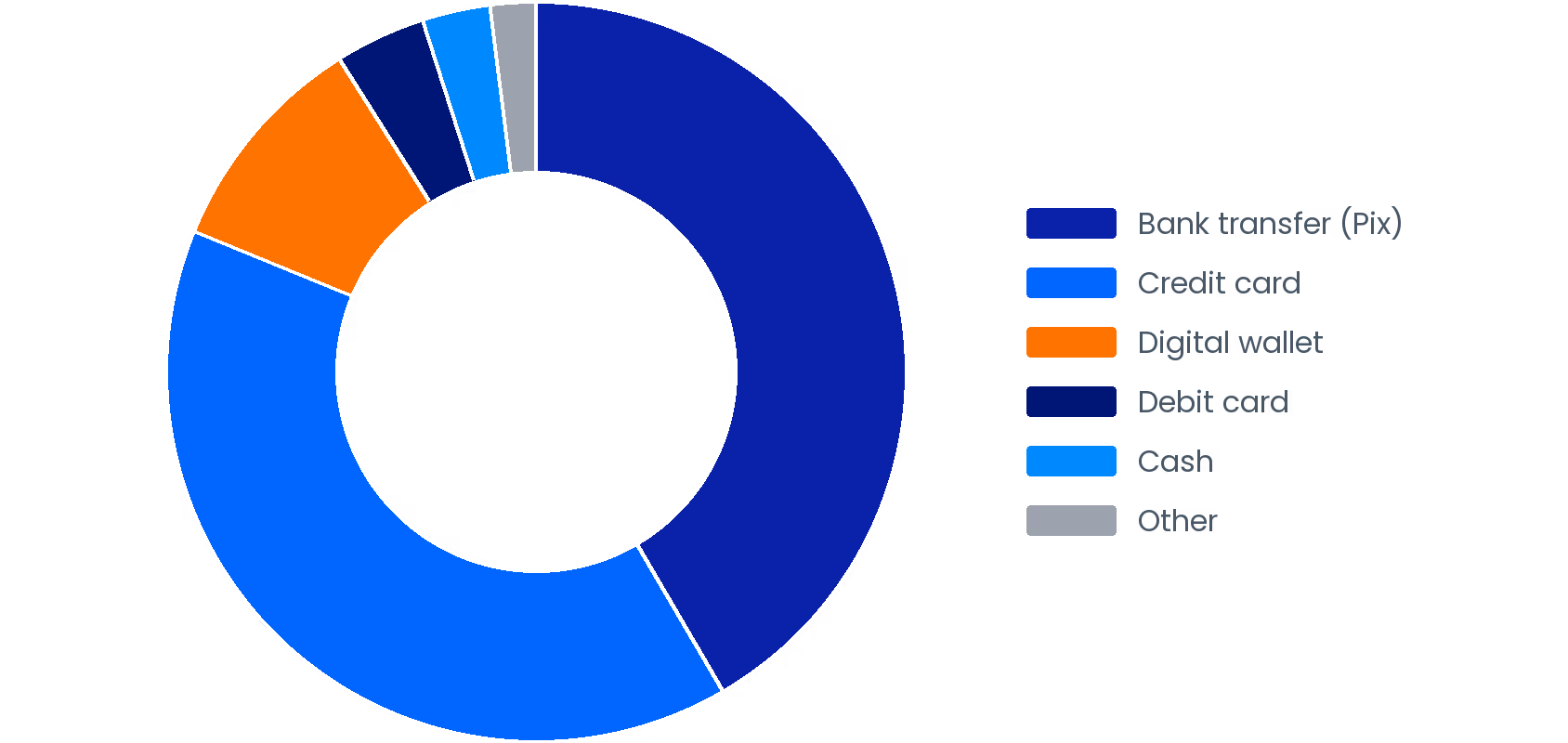
Bank transfers via Pix lead at 42% of online transactions, followed by credit cards at 40%. Together they account for approximately 82% of Brazilian online transaction volume — any merchant entering this market must support both from day one.
Bank transfer (Pix) — 42%. Operated by Brazil's central bank, Pix processes payments instantly, 24/7, at near-zero cost. Its share is projected to grow to 44% by 2030. For cross-border merchants, Pix's irreversibility once settled eliminates the chargeback fraud risk common on card payments — a major operational advantage in Brazil's high-fraud environment.
Credit card — 40%. Brazil's credit card market is the most developed in Latin America. Mastercard and Visa together account for 80% of card payments; local brand Elo holds meaningful share. Brazilian consumers frequently pay in interest-free installments (parcelamento) of 3–12x — merchants can use the payment method quadrant framework to decide whether to position installment credit or Pix as the primary checkout slot for their product category.
Digital wallet — 10%. Despite 85% population-level wallet penetration, the online shopping wallet share sits at a stable 10% — Brazilians use wallets extensively for non-payment functions beyond checkout. PayPal commands 24% of the wallet segment; Mercado Pago and PicPay hold significant local-market share.
Debit card — 4%. Small but steady. Visa and Mastercard dominate.
Cash — 3%. Typically fulfilled via offline payment slips at bank branches or convenience stores. Projected to decline to 1% by 2030.
Brazil 2025 Payment Method Share
How Pix, Credit Cards, and Wallets Work for Merchants in Brazil
Pix and credit cards together cover 82% of Brazilian online transactions — supporting both is the minimum viable checkout stack.
Payment Method | Key Platforms | Approx. Share | What Merchants Should Know |
|---|---|---|---|
Bank Transfer (Pix) | Banco Central do Brasil (Pix network), all major Brazilian banks | ~42% | Pix transactions are final and irreversible once settled — no buyer-initiated chargebacks, reducing fraud exposure significantly versus card rails. |
Credit Card | Mastercard, Visa, Elo | ~40% | Brazilian consumers frequently pay in interest-free installments (parcelamento) of 3–12x; merchants who do not offer installment options lose a material share of higher-ticket orders. |
Digital Wallet | PayPal, Google Pay, Mercado Pago, PicPay | ~10% | Mercado Pago and PicPay operate as closed-loop ecosystems — dispute resolution timelines differ from international card scheme rules. |
Debit Card | Visa, Mastercard | ~4% | Cross-border debit card authorization rates in Brazil are lower than domestic rates; routing through a local acquiring partner improves approval outcomes. |
Cash (offline slip) | Bank branches, convenience stores | ~3% | Offline payment slips require a 1–3 business day settlement window; hold orders open until payment confirmation before fulfillment. |
Why Cross-Border Card Authorization Underperforms in Brazil
Brazil's cross-border card authorization rate falls below 60% — well below the 90%+ rate that local channels such as Pix achieve. Antom's Latin America E-Commerce and Payment Trends Report attributes this to the region's 3.9% e-commerce fraud rate (vs. 3% globally per Visa), causing issuing banks to apply conservative decline filters across all cross-border transactions. Mexican banks reject 37% of online card authorization requests; Brazil's pattern is similar.
Smart routing to Pix recovers a significant share of those declines — moving from a sub-60% card environment to above 90% on the local rail. For merchants building multi-rail routing logic for high-decline markets, Brazil is the canonical use case.
Brazil Payment Method Share: 2025 vs 2030 Projection