






Japan is the world's fourth-largest economy by GDP, with an e-commerce market growing at a 9.23% CAGR (Compound Annual Growth Rate) and digital payment transaction volume projected to break $447.5 billion in 2025. Credit card adoption ranks first across Asia-Pacific at 76%, creating a card-dominant online payment environment unlike any other market in the region. Digital wallets are growing rapidly as a card-linked mobile extension rather than a standalone funding source.
Japan at a glance
Country | Japan |
|---|---|
Population | 123.0 million |
GDP (USD) | $4,280.0 billion |
Currency | Japanese Yen (JPY) |
Digital payment adoption | 73.12% (90.65 million users, 2025) |
E-commerce CAGR | 9.23% |
Which Payment Methods Do Japanese Buyers Use Most?
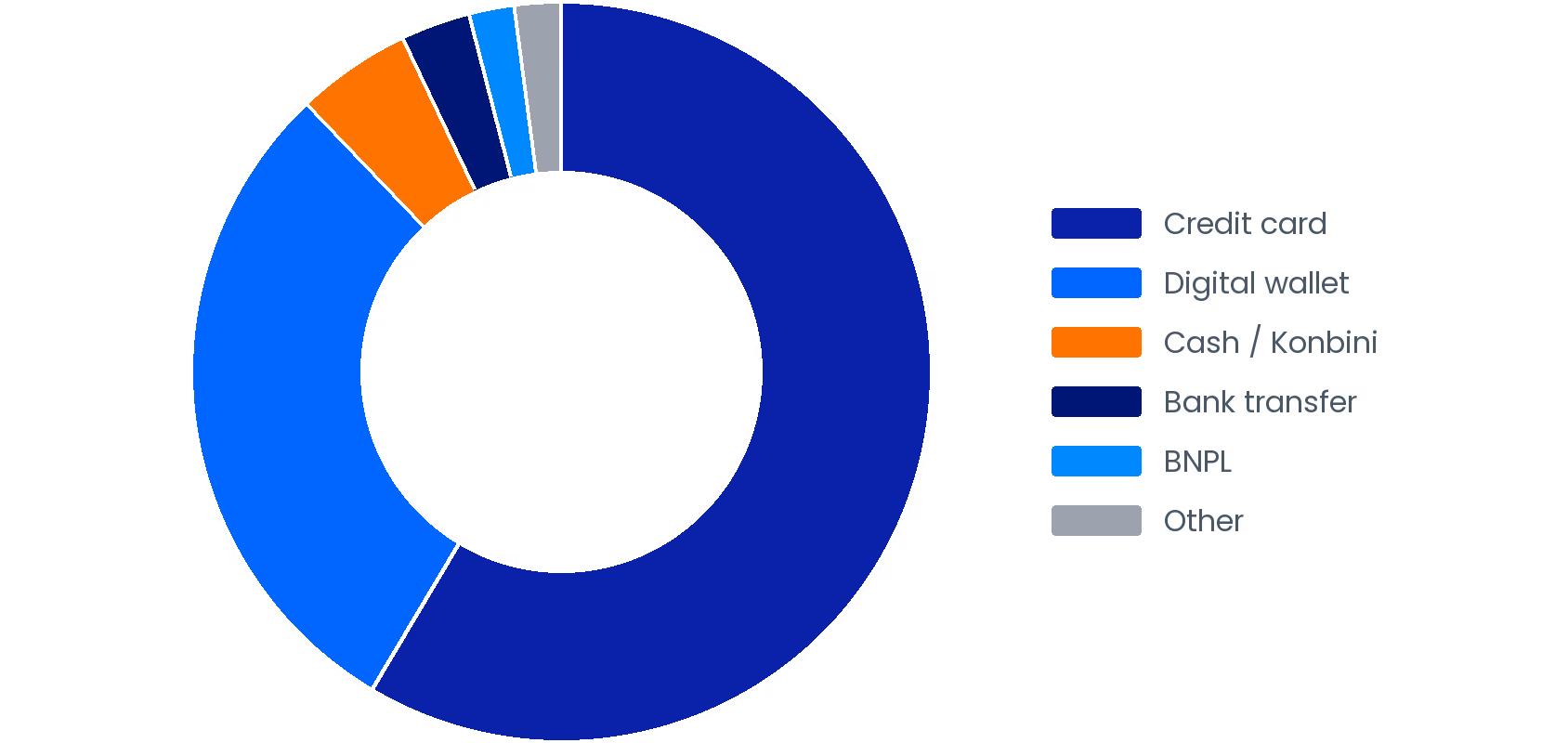
Credit cards hold 58% of Japan's e-commerce market in 2025 — the highest card share in Asia — with digital wallets at 29%. Together they cover 87% of online transaction volume. Japan's 2025 payment breakdown:
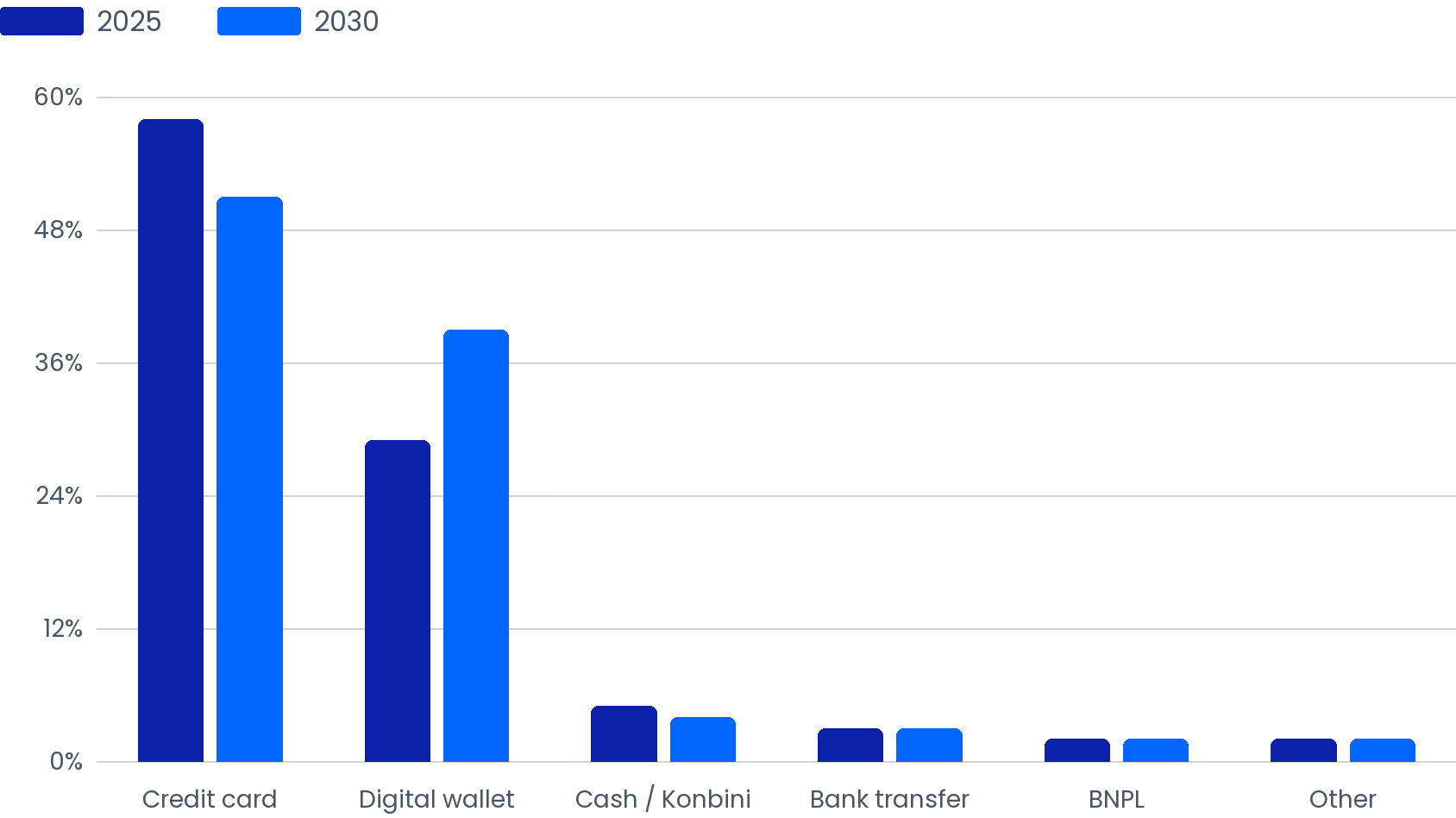
Credit cards (~58%). JCB, Visa, and Mastercard dominate the acquiring layer. Share is projected to ease to 51% by 2030 as wallets absorb volume, but cards remain the single largest category through the decade.
Digital wallets (~29%). PayPay, Rakuten Pay, and au PAY are the three most popular domestic brands. Wallets are primarily credit-card-funded — merchant settlement follows the card scheme timeline, not instant wallet settlement. Projected to reach 39% by 2030.
Cash / Konbini (~5%). Convenience store payment accounts for roughly 5% of online transactions. The buyer generates a reference code at checkout and pays in cash at any participating convenience store within a configurable window.
Bank transfer (~3%). Pay-easy is Japan's primary bank transfer service, supporting payments via online banking or ATM. Serves consumers who prefer not to use cards online, particularly for high-value purchases.
BNPL (~2%). Japan's mature credit card installment culture limits the incremental appeal of standalone BNPL (Buy Now, Pay Later) products; share is projected to remain flat through 2030.
Japan 2025 E-commerce Payment Method Share
How Credit Cards, Digital Wallets, and Konbini Work for Merchants in Japan
Japan's payment environment is defined by card-wallet interlock: wallets are primarily credit-card-funded, meaning card and wallet acceptance are tightly coupled. The central merchant integration challenge is scheme coverage — JCB-issued cards are silently rejected by international-only gateways that route exclusively through Visa and Mastercard. For merchants encountering JCB declines or wider cross-border card failures, multi-rail routing and card decline recovery logic is the standard fix.
Payment Method | Key Platforms | Approx. Share | What Merchants Should Know |
|---|---|---|---|
Credit Card | JCB, Visa, Mastercard | ~58% | JCB is Japan's domestic international card scheme — merchants using international-only gateways will silently reject JCB cardholders. Verify JCB acceptance separately before launch. |
Digital Wallet | PayPay, Rakuten Pay, au PAY | ~29% | Wallet balances are primarily funded by linked credit cards; settlement follows the card scheme timeline, not instant wallet settlement. |
Cash / Konbini | 7-Eleven, Lawson, FamilyMart | ~5% | Generates a payment reference at checkout; buyer pays at a convenience store within a configurable window (1–59 days, default 3–7 days). Do not fulfill until store confirms payment receipt. |
Bank Transfer | Pay-easy | ~3% | Payments via ATM or online banking; the reference expires within a set period — confirm expiry configuration with your gateway before enabling. |
BNPL | — | ~2% | Japan's credit card installment culture limits standalone BNPL adoption; share projected to stay flat through 2030. |
How Japan's Payment Mix Will Shift by 2030
Digital wallets are the standout growth category, rising from 29% to 39% by 2030 as PayPay, Rakuten Pay, and au PAY deepen card binding. Credit card share compresses from 58% to 51% — not a decline in card usage but migration of card credentials into the wallet layer. For merchants configuring checkout to reflect this layered card-wallet reality, the payment method quadrant framework provides a placement model for markets where the dominant method and the growth category are tightly coupled.
Japan Payment Method Share: 2025 vs 2030 Projection