

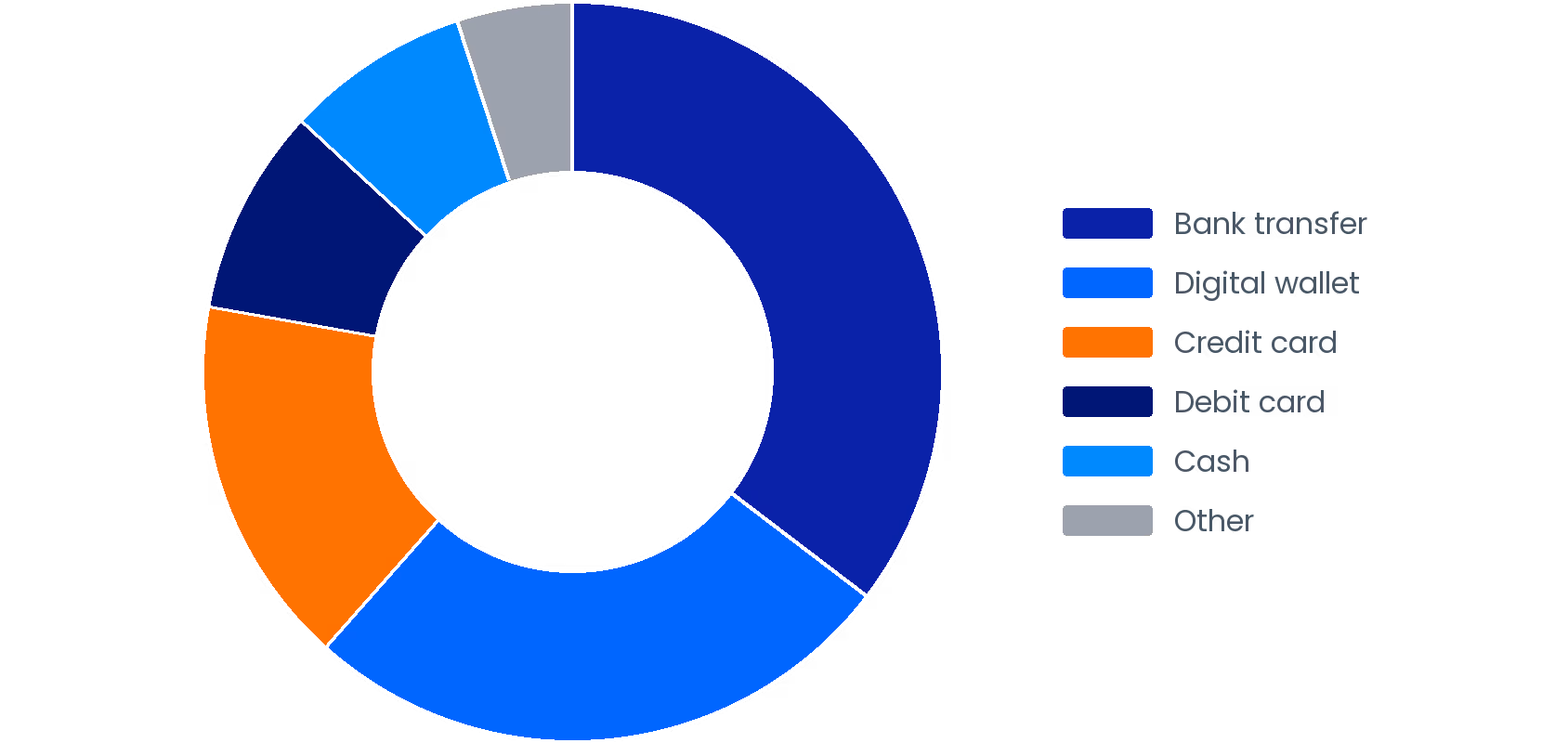
Bank transfer and digital wallets together account for 61% of Malaysian online transactions. The number of digital payment users will grow 35.45% between 2024 and 2028, reaching 31 million — nearly 90% of the country's 34.2 million population (Statista). Malaysia's defining characteristic is its dual-rail architecture: FPX (Financial Process Exchange), a bank-direct transfer network, runs parallel to a maturing e-wallet ecosystem anchored by Touch 'n Go.
Malaysia at a glance
Country | Malaysia |
|---|---|
Population | 34.2 million |
GDP (USD) | $437.0 billion |
Currency | Malaysian Ringgit (MYR) |
Dominant payment combination | Bank transfer + digital wallets: 61% combined share (Worldpay 2025) |
Digital payment users by 2028 | 31 million (+35.45% growth from 2024; Statista) |
Which Payment Methods Do Malaysian Buyers Use Most?
Bank transfer holds 35% of Malaysian online transactions, digital wallets 26%, and credit cards 16%. Together the top three rails cover 77% of the market. Malaysian consumers in 2025 split payments across five categories:
Bank transfer — 35%. FPX connects buyers directly to their bank accounts, bypassing card networks entirely. DuitNow QR, Malaysia's national QR standard, has 2.6 million registered acceptance points and supports cross-border interoperability.
Digital wallets — 26%. Touch 'n Go eWallet leads. Boost, GrabPay, and ShopeePay hold meaningful share among younger consumers. International wallets (Apple Pay, Google Pay, PayPal) have materially lower adoption than in regional peers.
Credit card — 16%. Visa and Mastercard dominate. Share is declining as consumers migrate to mobile payment endpoints.
Debit card — 9%. Contracting faster than credit, as FPX bank transfers serve the same account-direct function with lower friction.
Cash — 8%. Present in COD (Cash on Delivery) models for certain product categories; compressing as digital infrastructure matures.
Malaysia 2025 E-commerce Payment Method Share
How FPX, Wallets, and Cards Work for Merchants in Malaysia
Malaysia's payment methods split clearly between irrevocable local rails (FPX, wallets) and card-based methods that carry cross-border authorization risk — the key operational distinction for merchant checkout configuration. The table below details platforms, settlement behavior, and buyer eligibility for each method.
FPX payments are irrevocable once confirmed — no buyer-initiated chargeback exposure. Cross-border card authorization rates in Malaysia are lower than in Singapore or Hong Kong; merchants selling high-value items should configure multi-rail retry logic or offer FPX as a fallback.
Payment Method | Key Platforms | Approx. Share | What Merchants Should Know |
|---|---|---|---|
Bank transfer (FPX) | FPX, DuitNow QR | ~35% | FPX payments are irrevocable once confirmed — eliminates chargeback exposure common with card transactions. |
Digital wallet | Touch 'n Go, Boost, GrabPay, ShopeePay | ~26% | Touch 'n Go requires a Malaysian phone number for registration; international visitors may encounter eligibility gaps at checkout. |
Credit card | Visa, Mastercard | ~16% | Cross-border authorization rates lower than Singapore or Hong Kong; configure FPX as a fallback for high-value orders. |
Debit card | Visa Debit, Mastercard Debit | ~9% | Often co-branded with FPX — the same card may route via card rails or bank-direct rails depending on how checkout routes the transaction. |
Cash / COD | — | ~8% | Requires a local logistics partner; cross-border merchants without Malaysian warehouse operations cannot offer COD at launch. |
How Malaysia's Payment Mix Shifts Toward 2030
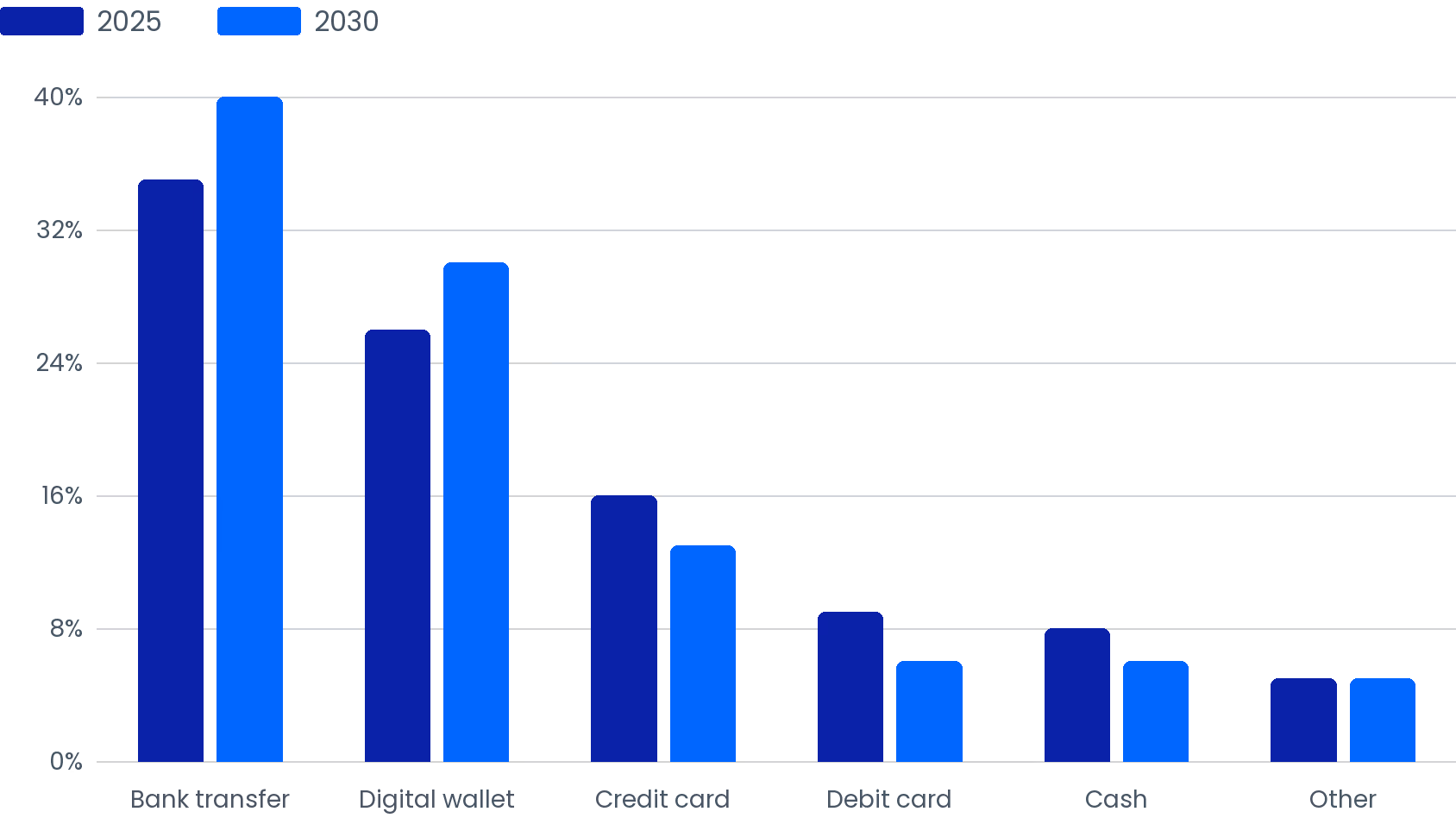
FPX bank transfer is projected to grow from 35% to 40% by 2030; digital wallets from 26% to 30%. Credit cards decline from 16% to 13%, debit cards from 9% to 6%, as mobile adoption accelerates. For merchants deciding how to structure payment method priority at checkout — which rail to lead with and which to offer as secondary — the 2030 trajectory reinforces FPX as the primary slot for any Malaysia launch.
Malaysia Payment Methods: 2025 vs 2030 Share %