






South Korea's e-commerce market is one of the most card-dominant and locally closed payment landscapes in East Asia. Credit cards hold 49% of online transaction volume in 2025, backed by government policy that makes credit card spending individually tax-deductible. Local card organizations control 97% of the domestic card market, creating a structural routing challenge for foreign merchants using international-only gateways. Digital payment users will reach 58.46 million in 2025, generating over USD 197.7 billion in transaction volume.
Quick facts: South Korea
Country | South Korea |
|---|---|
Population | 51.7 million |
GDP (USD) | $1,859 billion |
Currency | South Korean Won (KRW) |
E-commerce user penetration | Over 76% (Statista forecast, 2024–2029) |
Digital payment users (2025) | 58.46 million |
Which Payment Methods Do South Korean Buyers Use Most?
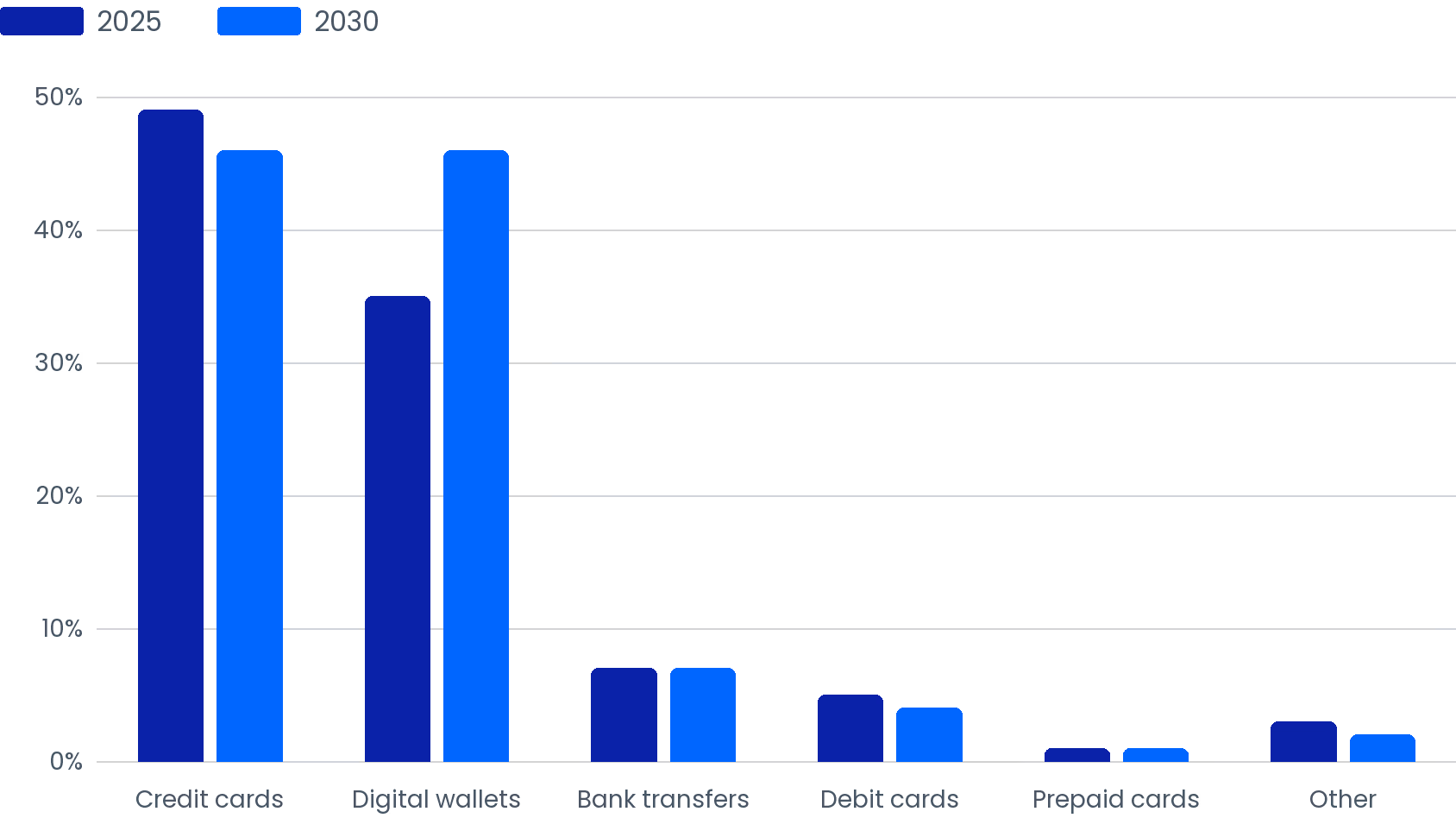
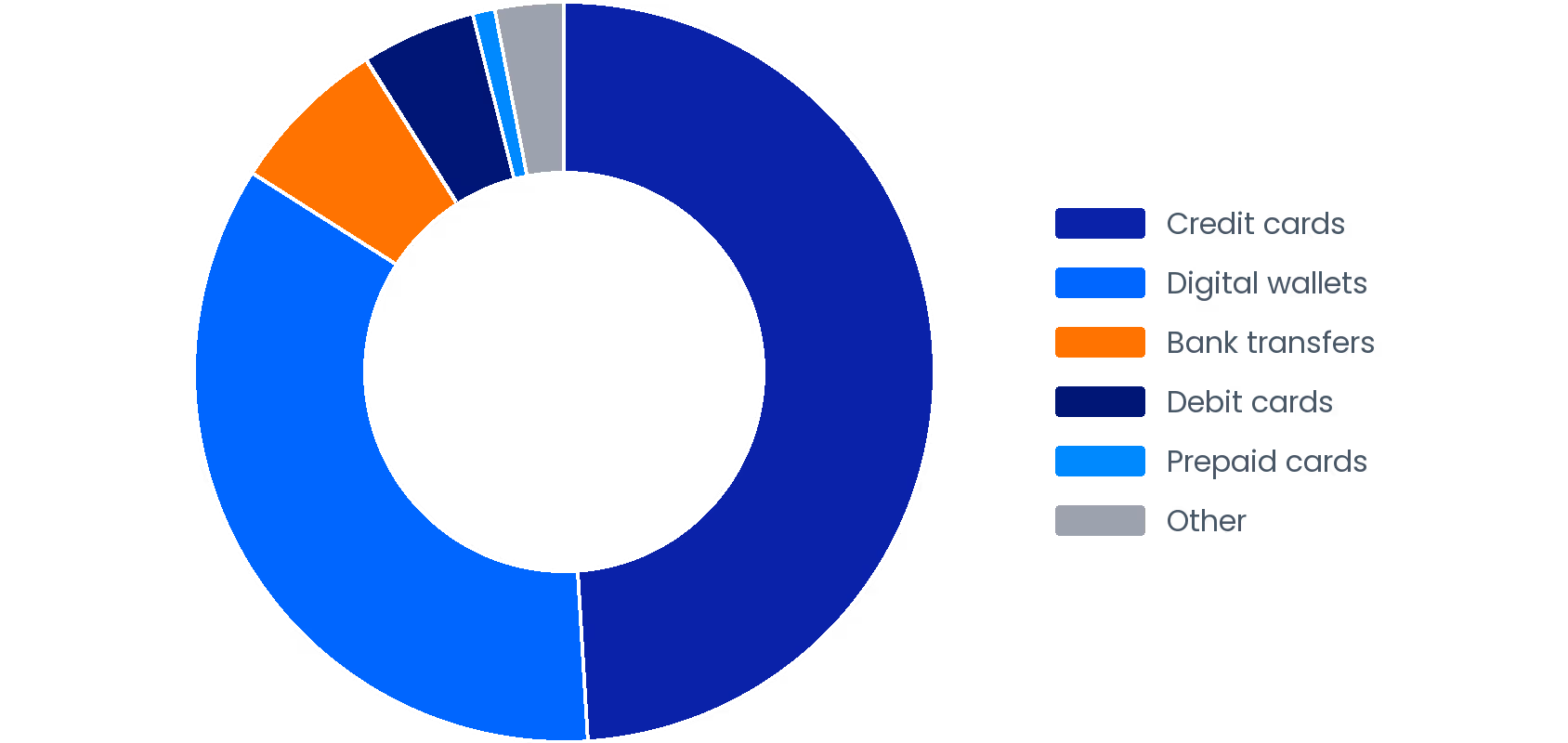
Credit cards dominate South Korean e-commerce with a 49% share in 2025; digital wallets hold 35% and are projected to surpass cards by 2030. Together they cover 84% of online transaction volume. South Korea's 2025 payment breakdown:
Credit cards (~49%). Government tax deductibility makes cards the structurally preferred payment type. The market is issued by nine major institutions — including Shinhan, Samsung, and Lotte — with dual-branded cards (co-branded Visa or Mastercard) accounting for 55% of cards in circulation.
Digital wallets (~35%, projected 46% by 2030). Kakao Pay, Naver Pay, and Samsung Wallet hold near-total dominance. The majority of wallet transactions are credit-card-funded — wallets function as a mobile interface for card payments, meaning card acceptance and wallet acceptance are tightly linked.
Bank transfers (~7%). The "Quick Bank Transfer" system binds accounts once at enrollment; subsequent transfers complete without re-authentication, showing a 20% higher success rate than traditional Korean bank transfer flows.
Debit cards (~5%). Usage is stable but modest. Visa and Mastercard are the primary international schemes on Korean debit cards.
Prepaid / gift cards (~1%). Widely used across department stores and convenience chains; a low-friction first-purchase option for buyers unfamiliar with a foreign merchant.
South Korea 2025 E-commerce Payment Method Share
How Credit Cards, Kakao Pay, and Naver Pay Work for Merchants in South Korea
South Korea's payment market is tightly integrated — local card organizations control 97% of the domestic card market, and the dominant wallets (Kakao Pay, Naver Pay) are funded primarily by those same local cards. International-only gateways will fail on the majority of Korean-issued cards. The table below covers key platforms, routing requirements, and what each method means for merchant integration. For merchants experiencing Korean card declines, routing through domestic Korean card networks and implementing smart retry logic is the standard approach.
Payment Method | Key Platforms | Approx. Share | What Merchants Should Know |
|---|---|---|---|
Credit Cards | Visa, Mastercard, Shinhan, Samsung, Lotte | ~49% | Korean-issued cards frequently fail on gateways that route through global schemes only — routing must include domestic Korean card network acceptance to avoid silent declines. |
Digital Wallets | Kakao Pay, Naver Pay, Samsung Wallet | ~35% | Wallet payments are mostly credit-card-funded; enabling Kakao Pay and Naver Pay through a gateway with Korean card network support covers both wallet and underlying card users in one integration. |
Bank Transfers | Quick Bank Transfer | ~7% | Account-binding enrollment happens once; subsequent transfers complete without re-authentication, reducing buyer drop-off compared to traditional Korean bank transfer flows. |
Debit Cards | Visa, Mastercard | ~5% | Debit transactions carry higher refusal rates for cross-border merchants — ensure 3DS (3-D Secure) is enabled to reduce false declines. |
Prepaid / Gift Cards | Various domestic issuers | ~1% | Commonly purchased at convenience stores as gifts; a low-friction entry point for first-time buyers with unfamiliar foreign merchants. |
Which Payment Methods Are Growing in South Korea?
The 2030 trajectory is unambiguous: credit cards ease from 49% to 46%, wallets grow from 35% to 46% — reaching parity for the first time. The underlying funding source remains credit cards for both categories, so the two trends reinforce rather than compete. For merchants configuring checkout to reflect this card-into-wallet migration, the payment method quadrant framework provides a placement model for markets where the dominant and growth categories are structurally linked.
South Korea Payment Methods: 2025 vs 2030 Projection