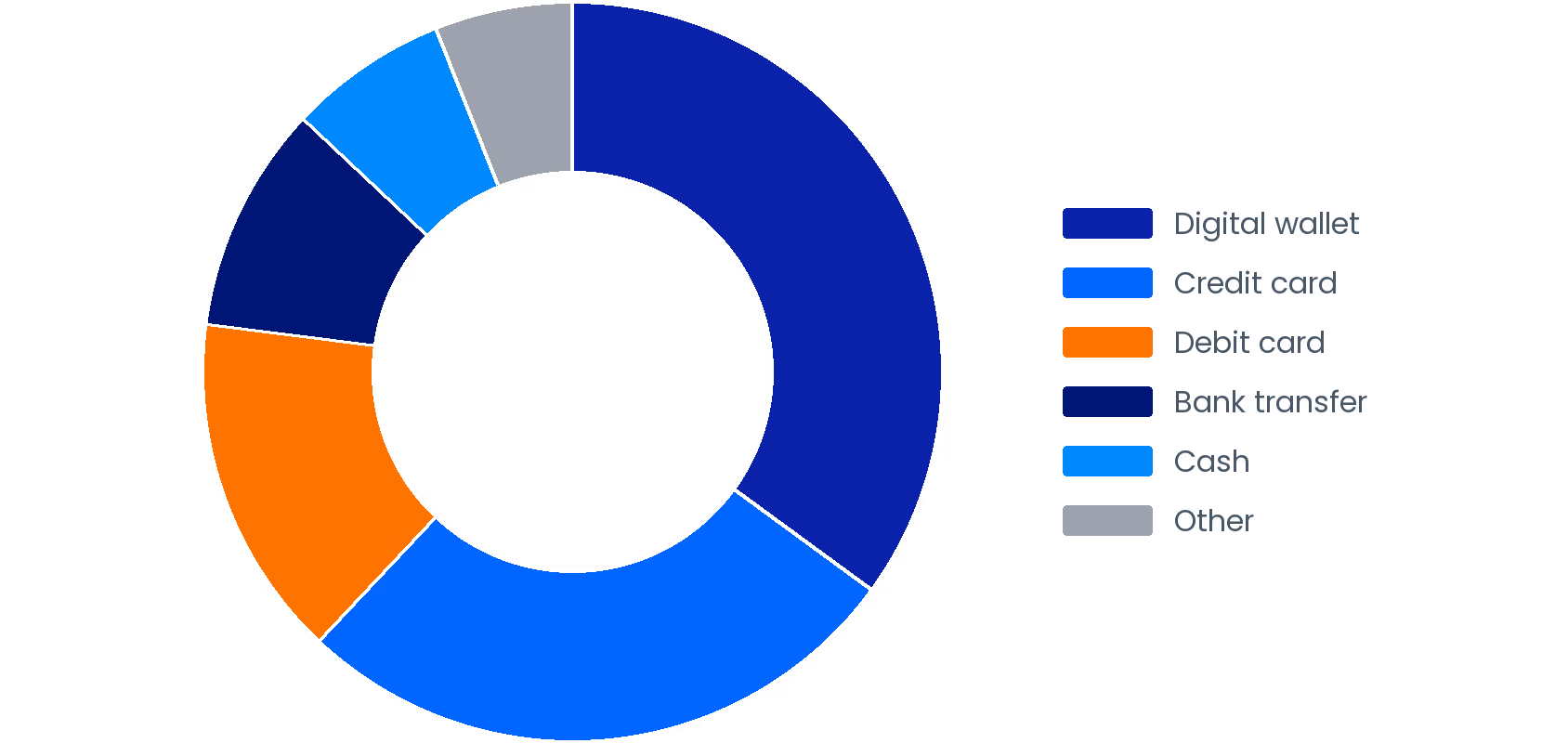
Digital wallets lead UAE online checkout at 35% of transaction value, followed by credit cards at 27% and debit cards at 15%. Together, wallets and cards account for 77% of UAE e-commerce payments, making them the core of a localized checkout.
UAE overview
Market | United Arab Emirates (UAE) |
|---|---|
Population | 11.3 million |
GDP (USD) | $517 billion |
Currency | UAE Dirham (AED) |
Which Payment Methods Do UAE Buyers Use Most?
Digital wallets lead UAE e-commerce at 35% in 2025, with Apple Pay as a prominent platform. Credit and debit cards account for 42% combined — credit cards at 27%, debit at 15%. Bank transfers hold 10%; Aani is a local instant-payment option within this category. Together, wallets and cards cover 77% of UAE online transaction volume. UAE's 2025 payment breakdown:
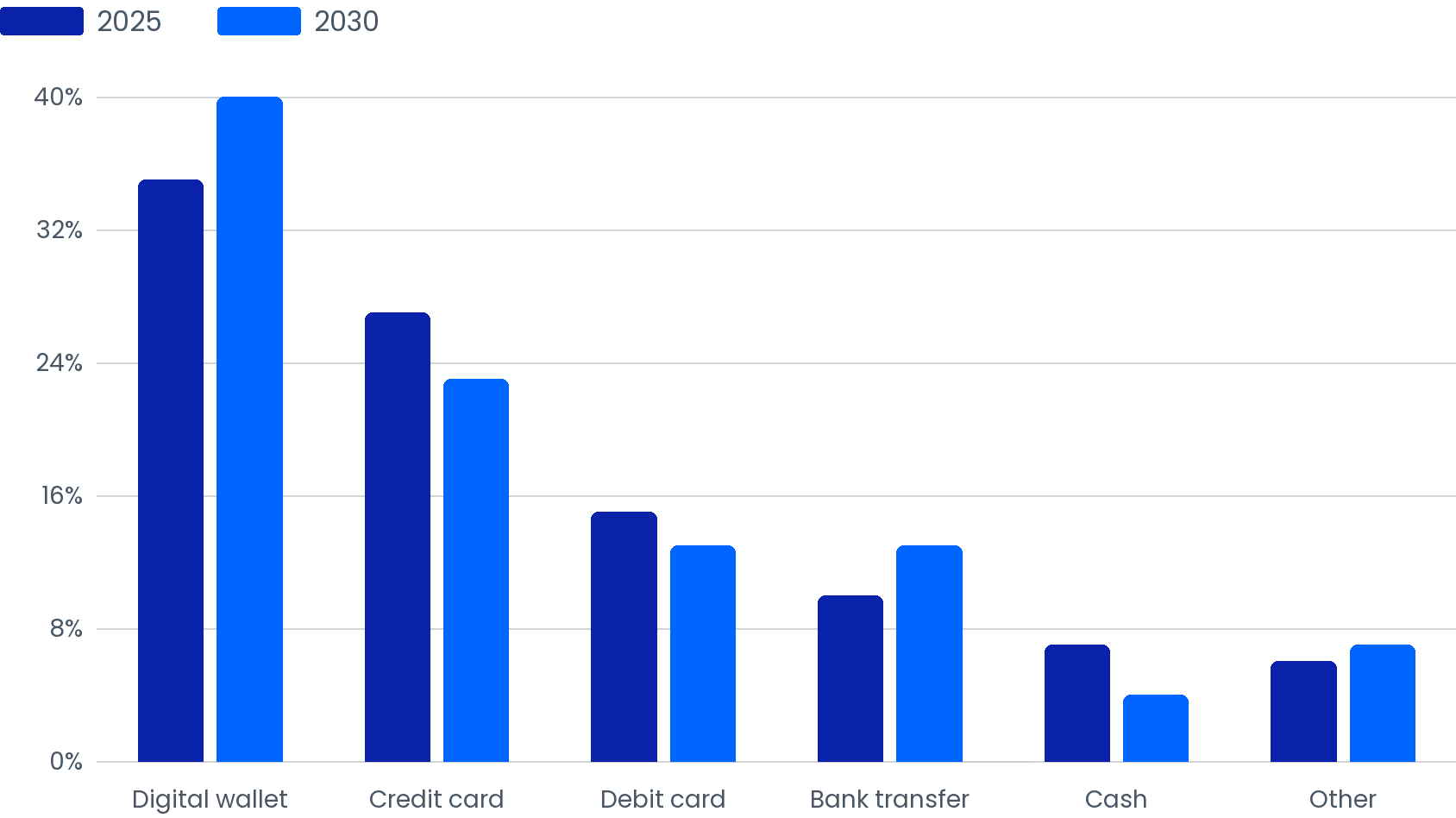
- Digital wallets — 35%, rising to 40% by 2030. Apple Pay dominates through bank-card-bound wallet logic — UAE consumers authenticate and pay with existing cards stored in their wallet. Merchants who display Apple Pay as a primary checkout option reduce friction for the majority of mobile shoppers.
- Credit cards — 27%, declining to 23% by 2030. Visa, Mastercard, and American Express are the main card brands in the market.
- Debit cards — 15%, declining to 13% by 2030. Some debit-card volume is completed through card-bound wallets such as Apple Pay.
- Bank transfers — 10%, rising to 13% by 2030. Aani supports instant payments using options such as QR codes and mobile numbers.
- BNPL — ~4%, projected 5% by 2030. Tabby and Tamara are prominent UAE providers. Availability, order limits, merchant settlement, refunds, and disputes depend on the provider and contract.
UAE E-Commerce Payment Method Share (2025)
How Digital Wallets, Cards, and Aani Work for Merchants in the UAE
The UAE's payment environment is card-heavy but wallet-led. The table below compares the main buyer-facing payment options. For general guidance on handling unsuccessful payments, see the failed payments guide.
Payment Method | Key Platforms | Approx. Share | What Merchants Should Know |
|---|---|---|---|
Digital Wallet | Apple Pay | ~35% | Apple Pay in the UAE is card-bound — the payment settles as a card transaction at card scheme interchange rates, not a separate wallet fee. |
Credit Card | Visa, Mastercard, American Express | ~27% | Choose the card brands available through your provider based on customer demand. |
Debit Card | Visa, Mastercard | ~15% | Acceptance and authentication outcomes vary by issuer, card, and transaction. |
Bank Transfer | Aani | ~10% | Aani is a local instant-payment option within the broader bank-transfer category. |
BNPL | Tabby, Tamara | ~4% | Consumer credit risk, merchant settlement, refunds, and purchase disputes are separate responsibilities governed by the provider's terms. |
Which Payment Methods Are Growing in the UAE?
Digital wallets grow from 35% to 40% by 2030, while the bank-transfer category rises from 10% to 13%. Credit and debit cards decline to 23% and 13%, respectively. Merchants can use the payment method quadrant framework to prioritize methods by customer demand and checkout friction.
UAE Payment Method Share: 2025 vs 2030 Projection