The United Kingdom is one of Europe's most mature digital payment markets, with digital payment transaction value exceeding $365.6 billion. Digital wallets became the largest individual online payment category in 2025 at 40%. The market is projected to grow at a CAGR (Compound Annual Growth Rate) of 17.22% through 2030, shaped by Open Banking expansion, BNPL (Buy Now, Pay Later), and SCA (Strong Customer Authentication) requirements.
United Kingdom overview
Country | United Kingdom |
|---|---|
Population | 69.5 million |
GDP (USD) | $3,959 billion |
Currency | British Pound Sterling (GBP) |
Digital payment transaction value (2025) | >$365.6 billion |
Which Payment Methods Do UK Buyers Use Most?
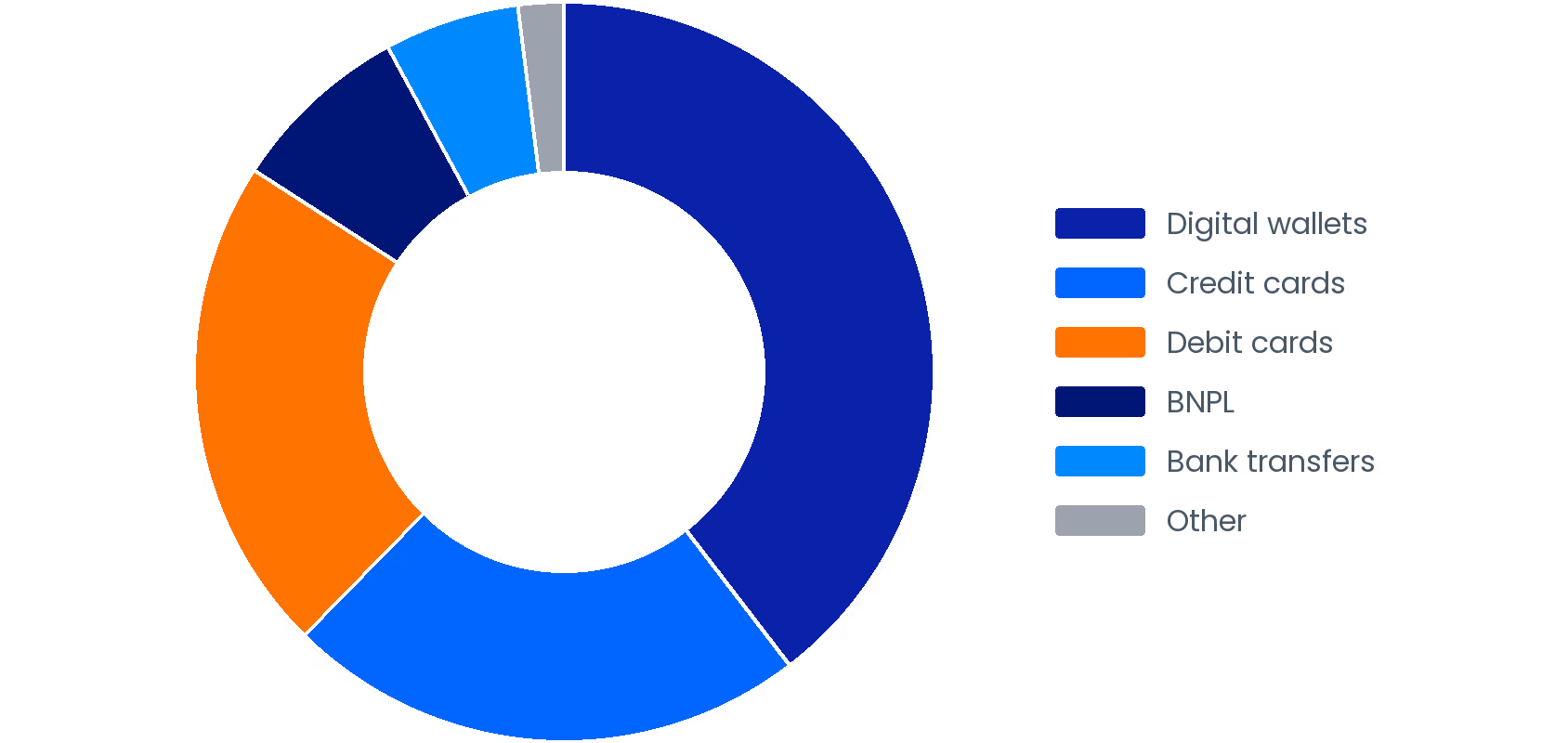
Digital wallets are the largest individual UK e-commerce category at 40% in 2025. Credit cards hold 23% and debit cards 22%; combined, the two card categories account for 45%. BNPL holds 8%. The UK's 2025 payment breakdown is:
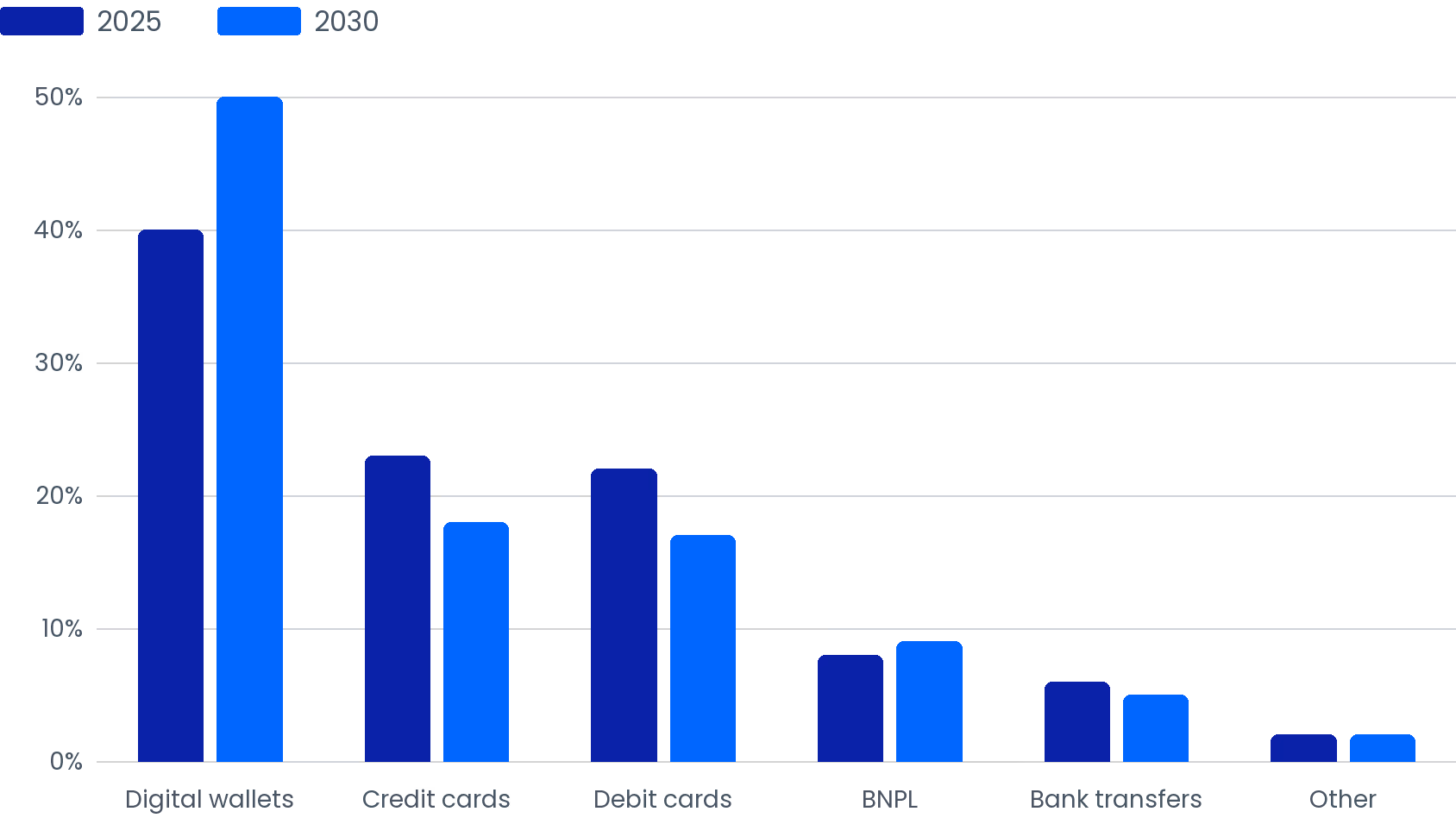
- Digital wallets — 40%, rising to 50% by 2030. Apple Pay, Google Pay, and PayPal are prominent options. Authentication depends on the credential and transaction; some Google Pay flows may still require 3DS.
- Credit cards — 23%, projected ~18% by 2030. Visa leads, followed by Mastercard. Merchants should monitor fraud and disputes and confirm current VAMP requirements with their acquirer.
- Debit cards — 22%, projected ~17% by 2030. Broadly stable but declining as wallet adoption grows. UK-issued debit cards are typically enrolled in 3DS2 (3-D Secure version 2) — ensure your gateway supports frictionless flow or SCA challenges will raise abandonment.
- BNPL — 8%, rising to 9% by 2030. Klarna, Clearpay, and Zilch are prominent options. Consumer credit risk, merchant settlement, refunds, and disputes depend on the product and contract.
- Bank transfers — 6%, projected 5% by 2030. Open Banking supports account-to-account payments, with the exact payment and refund flow depending on the provider.
UK E-commerce Payment Share 2025
How Digital Wallets, Cards, and Open Banking Work for Merchants in the UK
The UK payment landscape is shaped by SCA requirements and card-network monitoring programs such as Visa's VAMP. The table compares the buyer experience and key checkout considerations for each method. For merchants handling card declines or disputes, the failed payments guide covers recovery and dispute-management practices.
Payment Method | Key Platforms | Approx. Share | What Merchants Should Know |
|---|---|---|---|
Digital wallets | Apple Pay, Google Pay, PayPal | ~40% | Authentication depends on the credential and transaction. Google Pay may return an authenticated payload or a PAN that requires risk checks and, where applicable, 3DS. |
Credit cards | Visa, Mastercard | ~23% | Monitor fraud and disputes and confirm current card-network monitoring requirements with your acquirer. |
Debit cards | Visa Debit, Mastercard Debit | ~22% | UK-issued debit cards are typically enrolled in 3DS2 — ensure your gateway supports the frictionless flow or SCA challenges will interrupt low-risk debit transactions and raise cart abandonment. |
BNPL | Klarna, Clearpay, Zilch | ~8% | Consumer credit risk, merchant settlement, refunds, and disputes vary by product and contract. |
Bank transfers | Open Banking / A2A | ~6% | Payment confirmation, refunds, and dispute handling depend on the provider and payment flow. |
How the UK's Payment Mix Will Shift by 2030
Digital wallets grow from 40% to 50% by 2030 as Apple Pay and Google Pay deepen card-binding adoption. Credit cards ease from 23% to 18%; debit cards from 22% to 17% as card credentials migrate into wallet layers. BNPL grows from 8% to 9%. For merchants configuring checkout to reflect this wallet-dominant trajectory, the payment method quadrant framework provides a placement model that accounts for the UK's overlapping wallet-card relationship and BNPL uplift role.
UK Payment Method Share: 2025 vs 2030